


Wednesday, March 25, 2026 — Pre-market coverage as of 12:00 UTC. All times listed are Eastern Time unless otherwise noted.
Market Snapshot: Futures Rally on Iran Ceasefire Hopes
U.S. equity futures are climbing decisively on Wednesday morning after reports emerged overnight that the Trump administration has sent a formal 15-point ceasefire proposal to Tehran and that U.S. and Iranian negotiators have engaged in substantive talks. President Trump confirmed the development, stating the two sides are “in negotiations right now,” a shift from prior ambiguity that sent markets sharply higher during Asian and European hours.
| Futures Contract | Direction | Key Driver |
|---|---|---|
| S&P 500 Futures (ES) | ▲ Rising | Iran ceasefire talks, risk-on sentiment |
| Dow Jones Futures (YM) | ▲ Rising | Iran peace optimism, Merck M&A |
| Nasdaq 100 Futures (NQ) | ▲ Rising | ARM chip rally, OpenAI $120B raise |
| Russell 2000 Futures (RTY) | ▲ Rising modestly | Small-cap recovery attempt after correction |
| WTI Crude Oil | ▼ Down ~5% | Iran signals Strait of Hormuz de-escalation |
| Brent Crude | ▼ Down ~5% | Ceasefire proposal, safe-passage signals from Tehran |
| Gold | ▼ Slight decline | Risk appetite returning, safe-haven flows reduced |
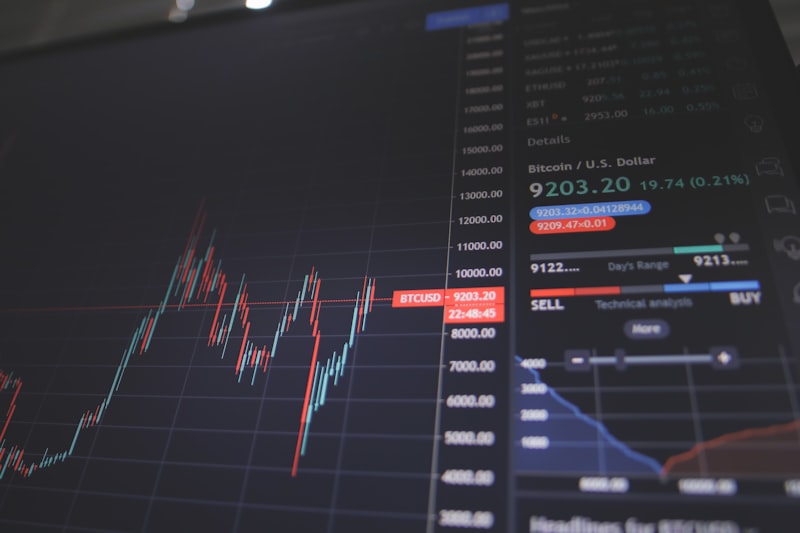
| Bitcoin (BTC/USD) | ▲ ~$71,697 (+0.91%) | Broad risk-on environment |
The sharp drop in crude prices is the dominant market development of the pre-market session. Iran’s statement that it would guarantee safe passage through the Strait of Hormuz for “non-hostile” vessels removes—at least temporarily—the most acute supply disruption risk that has pushed energy prices to multi-year highs in recent weeks. Brent crude fell approximately 5% on the news. However, analysts caution that ceasefire talks remain fragile and that Iran has not formally accepted any proposal.
The Iran Equation: Relief Rally or Durable De-escalation?
The Iran-US conflict has been the defining macro variable for global markets since late February, driving elevated oil prices, suppressed risk appetite, and unusual volatility in currency and credit markets. Wednesday’s pre-market action reflects tentative optimism—not a definitive resolution.
Key developments overnight include:
- Iran received Trump’s 15-point plan: According to multiple reports, Tehran has formally received a U.S. framework for ending hostilities. President Trump confirmed negotiations are active, stating he pulled back from threatening strikes on Iranian energy infrastructure “based on the fact we’re negotiating.”
- Iran signals Strait of Hormuz flexibility: Tehran announced it would allow ships it considers “non-hostile” to pass through the strategic waterway, which handles roughly 20% of global oil trade. The move is seen as a confidence-building measure, though it stops short of a formal agreement.
- Jamie Dimon cautiously optimistic: JPMorgan Chase CEO Jamie Dimon said the Iran war could, in the long term, improve prospects for broader Middle East peace—a view that helped anchor sentiment.
- Pakistan offers to mediate: Islamabad offered to facilitate U.S.-Iran talks, adding another diplomatic channel to the negotiations that have so far been conducted through back-channels.
Despite the relief rally, structural concerns remain elevated. A Deutsche Bank analyst noted this week that a world “becoming self-sufficient in defense and energy” could also be one that holds fewer dollar reserves—a long-term shift with significant implications for U.S. Treasury markets and LatAm commodity exporters alike.
Premarket Movers: Stocks to Watch Before the Bell
ARM Holdings — +13% Premarket
Arm Holdings (ARM) is the clear standout gainer in Wednesday’s pre-market session, surging approximately 13% after the British chip design company revealed that its first in-house chip is on track to generate $15 billion in revenue by 2031—six times the $4 billion the company generated in fiscal 2025. The announcement represents a significant strategic pivot for Arm, which has historically licensed its instruction set architecture to third parties rather than designing and selling finished chips. The move positions Arm more directly in competition with Nvidia, Intel, and Qualcomm in the rapidly expanding artificial intelligence accelerator market.
KB Home — Under Pressure
Homebuilder KB Home (KBH) is facing selling pressure after cutting its full-year guidance and explicitly attributing the revision to the ongoing Iran conflict. Management noted that prospective buyers are being deterred by the geopolitical uncertainty, a signal that the Iran war’s economic impact is beginning to filter through to consumer-facing industries beyond energy. The guidance cut is notable given that KB Home operates primarily in major Sun Belt markets including California and Texas—areas with structurally strong housing demand that are showing cracks under the current environment.
Other Notable Premarket Movers
CNBC’s premarket movers report also highlights Chewy (CHWY) and EchoStar as names experiencing elevated early activity. Chewy’s moves appear tied to updated competitive dynamics in the pet retail market, while EchoStar continues to attract attention amid ongoing speculation about its satellite communications assets.
Macro Risks: Recession Odds Rise, Mortgage Demand Craters
Beyond the Iran ceasefire narrative, Wednesday’s pre-market session carries a sobering undercurrent of deteriorating U.S. economic data:
- Recession probability rising: A new CNBC report notes that Wall Street economists are revising recession risk upward, citing heightened geopolitical uncertainty, a softening labor market, and persistent consumer caution. The combination of an active war, stubborn inflation, and slowing hiring is being described as a “fraught but intense” macro environment by Fed officials including Chicago Fed President Austan Goolsbee.
- Mortgage demand collapses: Mortgage application volumes fell more than 10% last week as the average 30-year fixed mortgage rate climbed to its highest level since October. Affordability conditions are at multi-decade lows for first-time buyers. KB Home’s guidance cut reinforces what the mortgage data suggests: the U.S. housing market is under meaningful stress.
- CFO confidence fading: A Federal Reserve survey of U.S. company CFOs showed a notably solid economic outlook—until the Iran conflict erupted. The survey data suggest that business investment plans are being paused or revised downward as executives await clarity on the geopolitical trajectory.
- SpaceX IPO speculation: The Information reported Wednesday that SpaceX could file for a public market listing this week in what would be one of the largest IPOs in U.S. history. While details remain unconfirmed, the potential offering could draw significant capital allocation attention across the tech and aerospace investment community.
Corporate Earnings & M&A: Key Developments
Merck Acquires Terns Pharmaceuticals for $6.7 Billion
Merck (MRK) announced a $6.7 billion acquisition of Terns Pharmaceuticals, a biotech developing an oral treatment for leukemia. The deal is squarely aimed at bolstering Merck’s oncology portfolio ahead of 2028, when its blockbuster cancer therapy Keytruda begins losing patent exclusivity. Keytruda generated approximately $25 billion in revenue in 2025, making the upcoming patent cliff one of the most consequential events in pharmaceutical industry planning. The Terns acquisition adds an oral leukemia candidate to Merck’s pipeline at a time when oral oncology therapies command strong premium pricing and patient adherence advantages over intravenous alternatives.
OpenAI Raises Round to $120 Billion Total
OpenAI CFO Sarah Friar confirmed to CNBC that the company has raised additional capital, bringing its historic funding round to $120 billion—well above the initial $100 billion target. The raise values OpenAI at an extraordinary level and cements its position as the most highly valued private company in the artificial intelligence sector. In a separate development, OpenAI announced it is shuttering its Sora short-form video app, which went viral following its launch six months ago. The closure reflects a broader recalibration of cost centers as OpenAI prioritizes its core ChatGPT and enterprise API products.
Meta Bets on Retention with Executive Stock Options
Meta Platforms (META) is granting significant stock options to its top leadership as the company intensifies its effort to retain key personnel during the AI arms race. The options program represents a “big bet” on senior leaders at a moment when talent competition with Google DeepMind, Anthropic, and OpenAI is at its most acute. Separately, a New Mexico jury ordered Meta to pay $375 million in a child exploitation case, ruling that the company failed to adequately safeguard its platforms from predators.
Pop Mart Shares Plunge 22%
Hong Kong-listed Pop Mart International, the Beijing-based toy maker behind the Labubu collectible craze, saw its shares fall over 22% in Asian trading despite reporting record annual revenue of 37.1 billion yuan ($5.4 billion)—a 185% increase year-over-year. Investors are questioning whether the Labubu phenomenon is a sustainable franchise or a passing trend, particularly as the company missed LSEG consensus revenue estimates of 38 billion yuan. Management is betting on theme parks, films, and global expansion to extend the brand.
SK Hynix Files Confidentially for U.S. Listing
South Korean memory chipmaker SK Hynix has made a confidential filing for a potential U.S. stock market listing, the company confirmed Wednesday. The move would give SK Hynix access to U.S. capital markets as it scales production to meet surging demand for high-bandwidth memory chips used in AI training. The company described current conditions as a period of “unprecedented growth” for the memory sector.
Private Credit Under Stress: The End of “Zero-Loss Fantasy”
A theme that is increasingly commanding attention across credit markets is the deterioration in private credit funds, which boomed during the low interest rate era and attracted hundreds of billions in retail capital:
- Moody’s downgrades KKR fund to junk: Moody’s cut its rating on a private credit fund managed by KKR and Future Standard to junk status as bad loans accumulate. The downgrade is among the most high-profile signals yet that credit quality in the sector is eroding.
- Apollo limits investor withdrawals: Apollo Global Management fulfilled only 45% of investor withdrawal requests from its $15 billion private credit fund—a stark illustration of liquidity constraints in a sector that marketed itself as offering near-liquid returns. Blackstone and other major managers are experiencing similar redemption pressure.
- BlackRock’s Fink on withdrawal rules: BlackRock Chairman Larry Fink took a blunt stance this week, telling investors in private credit funds who want to exit: “Those are the rules, live with it.”—a comment that encapsulates the growing tension between retail investor expectations and the illiquid nature of private credit assets.
Latin America: FX, Commodities & Regional Updates
Currency Markets
| Currency Pair | Rate (vs. USD) | Key Context |
|---|---|---|
| USD/BRL (Brazilian Real) | 5.2474 | Iron ore, oil-price sensitivity; Iran de-escalation positive for Petrobras |
| USD/MXN (Mexican Peso) | 17.7880 | Nearshoring momentum continues; peso remains resilient amid global uncertainty |
| USD/ARS (Argentine Peso) | 1,452.25 | IMF program stabilizing macro backdrop; Milei reform trajectory intact |
| USD/CLP (Chilean Peso) | 911.28 | Copper prices sensitive to Iran conflict resolution and China demand |
| USD/COP (Colombian Peso) | 3,708.17 | Oil exposure; Brent decline moderately negative for fiscal revenues |
| USD/PEN (Peruvian Sol) | 3.4620 | Copper/zinc export revenues; political risk remains elevated |
Venezuela: Machado Calls for Full Oil Privatization
In a significant statement with long-term implications for Venezuelan oil production, opposition leader María Corina Machado called for the full privatization of Venezuela’s oil industry. Her remarks come as the country’s energy sector remains starved of investment following the U.S.-backed ousting of former President Nicolás Maduro. International oil companies remain hesitant to commit capital given ongoing political and legal uncertainty. A fully privatized PDVSA, if it were to materialize under a future government, could dramatically alter Venezuela’s production trajectory from its current lows of roughly 900,000 barrels per day—potentially positioning the country as a meaningful swing producer within a decade.
South Korea Braces for Iran Oil Shock
While not a LatAm story per se, South Korea’s warning that it must prepare for “worst-case scenarios” stemming from Iran-related oil disruptions is instructive for LatAm commodity exporters and importers alike. South Korea imports approximately 70% of its oil from the Middle East, making it acutely exposed. For LatAm oil importers such as Chile and Central American nations, sustained elevated oil prices represent a material headwind to growth and external balances.
LatAm Markets Outlook for Wednesday
The combination of a partial oil price relief from Iran ceasefire talks and a general risk-on global tone provides a constructive backdrop for LatAm equities at Wednesday’s open. Brazil’s Ibovespa index is likely to open positively, with oil-exposed names like Petrobras (PBR) facing a complex session: lower crude prices reduce near-term revenue upside but the de-escalation narrative reduces the geopolitical risk premium that has weighed on Brazilian equities broadly. The MSCI EM Latin America index should benefit from the improving global risk appetite, with the Mexican IPC and Chilean IPSA also positioned for modest gains.
Key Economic Data & Events Today
| Time (ET) | Event | Relevance |
|---|---|---|
| 8:30 AM | U.S. Weekly Jobless Claims | Labor market health; Fed rate expectations |
| 10:00 AM | U.S. New Home Sales (February) | Housing sector stress following KB Home warning |
| 10:30 AM | EIA Natural Gas Storage Report | Energy markets; relevant with Iran supply uncertainty |
| All Day | Iran Ceasefire Diplomacy | Dominant macro risk-on/off driver for all asset classes |
Global Overnight Markets
Asian markets closed broadly higher overnight, with the regional tone lifted by Trump’s comments signaling de-escalation with Iran. European indices also advanced during the morning session, led by energy-importing economies that benefit most from lower oil prices. The euro traded around 1.16 against the dollar, with the European Central Bank maintaining its wait-and-see posture amid conflicting signals from geopolitics and domestic inflation.
In Asia, Japan’s Nikkei responded positively as the yen strengthened modestly against safe-haven dynamics unwinding. China-linked indices saw measured gains, with Alibaba (BABA) and Tencent holding steady after recent earnings-driven volatility. The broader MSCI Asia ex-Japan index tracked the risk-on sentiment globally.
Editor’s Watchlist
- ARM Holdings (ARM): +13% premarket. Watch for whether the rally holds through the open or faces profit-taking.
- Oil Complex (CL=F, BZ=F): A 5% drop in crude is significant. Monitor for any counter-statements from Tehran that could reverse the move.
- Merck (MRK): The Terns acquisition adds pipeline depth ahead of Keytruda’s patent expiration. Biotech sector may see sympathy moves.
- KB Home (KBH): Guidance cut tied explicitly to war impact. Watch homebuilder peer group (LEN, DHI, TOL) for read-through.
- Private Credit ETFs & BDCs: Moody’s KKR downgrade and Apollo withdrawal limits are building pressure on the broader private credit complex.
- LatAm Oil Producers (PBR, EC): Crude price decline offset by geopolitical premium unwinding—net effect on valuations will be complex to parse intraday.
This briefing is published for informational purposes only and does not constitute investment advice. Data sourced from publicly available news reports, RSS feeds, and open exchange rate providers as of 12:00 UTC, March 25, 2026.