

Introduction: Agriculture at Scale in the Southern Cone
Adecoagro S.A. (NYSE: AGRO) is one of South America’s most diversified and sophisticated agribusiness companies, operating across Argentina, Brazil, and Uruguay. Founded in 2002 and publicly listed in 2011, Adecoagro has evolved from a land-focused agricultural play into a fully integrated producer spanning row crops, sugar and ethanol, dairy, and active land transformation. With approximately 230,000 hectares under management and operations across three countries, the company represents a compelling exposure to the long-term structural demand for food, fuel, and fiber in one of the world’s most fertile agricultural regions.
Unlike many commodity producers, Adecoagro has systematically built competitive advantages through operational efficiency, disciplined capital allocation, and a culture of continuous improvement. Its diverse business portfolio not only buffers against commodity-price volatility but also creates multiple levers for value creation. For investors seeking exposure to global food security themes, Adecoagro offers a rare combination of asset-backed value, cash-generation ability, and growth optionality in a region with world-class agricultural endowments.
Business Model: Four Engines of Value Creation
1. Farming & Land Transformation
Adecoagro’s farming operations span Argentina and Uruguay and cover a diversified mix of row crops including soybeans, corn, wheat, sunflower, and peanuts. The company owns and leases farmland strategically selected for soil quality, water availability, and proximity to infrastructure. Its agronomic practices are among the most advanced in the region, leveraging precision agriculture, GPS-guided machinery, and proprietary data systems to maximize yields while minimizing input costs.
A distinctive feature of Adecoagro’s model is its active land transformation strategy. The company identifies underdeveloped or undervalued land parcels, invests in improvements — including drainage, soil conditioning, and infrastructure — and then sells the land at a significant premium once fully operational. This “buy-improve-sell” cycle has historically generated substantial capital gains and allows the company to recycle capital into higher-return opportunities. Over the years, land transformation has produced hundreds of millions of dollars in gains, serving as a value-unlocking mechanism distinct from operating earnings.
2. Sugar, Ethanol & Energy (Brazil)
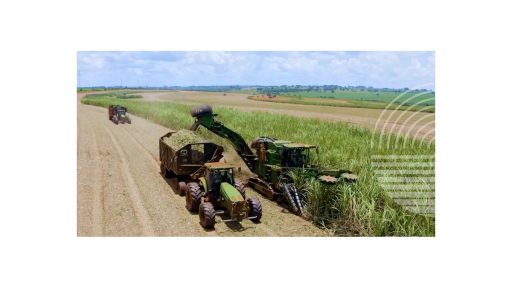
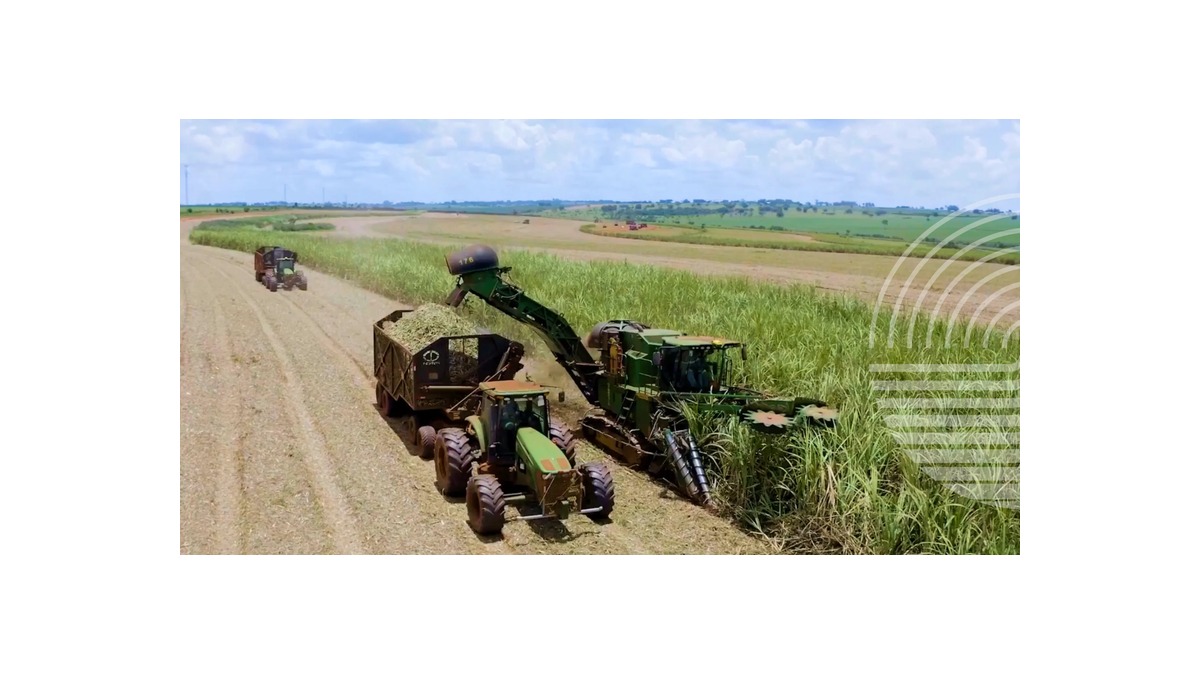
Brazil is home to Adecoagro’s most capital-intensive and arguably most strategic business: its sugar, ethanol, and energy segment. Operating three mills in the Mato Grosso do Sul state — Usina Monte Alegre (UMA), Usina Angélica, and Usina Ivinhema — the company processes sugarcane into a flexible mix of sugar and hydrous ethanol, dynamically adjusting the production split based on relative prices and market demand.
This flexibility is a key competitive advantage. Brazil’s energy matrix is uniquely suited to bioethanol, and the domestic flex-fuel vehicle fleet ensures a persistent structural demand for hydrous ethanol as a cleaner-burning alternative to gasoline. Additionally, Adecoagro co-generates electricity from sugarcane bagasse (the fibrous byproduct of cane crushing), selling surplus power to the national grid. This energy segment adds a third revenue stream and improves overall mill economics.
The sugar-energy segment typically accounts for roughly 60–70% of Adecoagro’s total revenues, making it the dominant earnings driver. The company has invested heavily in expanding crushing capacity and improving agricultural productivity in its sugarcane fields, reducing costs per ton crushed year over year.
3. Dairy Operations
Adecoagro’s dairy segment, concentrated in Argentina, operates one of the largest and most modern dairy farms in South America. With a herd of approximately 17,000 to 20,000 cows, the company produces fresh milk processed into powder, fluid milk, butter, and other dairy derivatives for both domestic consumption and export markets.
The dairy business benefits from vertical integration — Adecoagro grows its own feed crops, manages its own herd, and processes milk at on-site facilities, giving it tight control over cost and quality. While this segment faces Argentina-specific macroeconomic risks (peso volatility, export restrictions), it also benefits from strong global demand for dairy commodities, particularly from Asian markets. In recent years, Adecoagro has expanded dairy exports and invested in productivity improvements to position this segment for long-term growth.
4. Rice Operations (Uruguay)
In Uruguay, Adecoagro operates a rice production and processing business, farming irrigated paddy fields and exporting milled rice primarily to Brazil, the United States, and the European Union. Uruguay’s rice sector benefits from recognized quality standards and trade advantages, and Adecoagro’s operations are among the most efficient in the country. While smaller in absolute contribution, the rice segment provides geographic diversification and access to premium export markets.
Financial Highlights
Adecoagro has demonstrated consistent revenue growth and improving margins over the past several years, driven by capacity expansions in Brazil, productivity gains in farming, and favorable commodity price environments.
| Metric | FY2021 | FY2022 | FY2023 |
|---|---|---|---|
| Net Revenue (USD M) | ~$1,020 | ~$1,300 | ~$1,150 |
| Adjusted EBITDA (USD M) | ~$315 | ~$420 | ~$360 |
| Adjusted EBITDA Margin | ~31% | ~32% | ~31% |
| Net Income (USD M) | ~$120 | ~$180 | ~$130 |
| Free Cash Flow (USD M) | ~$90 | ~$150 | ~$110 |
| Net Debt / Adjusted EBITDA | ~2.2x | ~1.8x | ~2.0x |
Note: Figures are approximate based on publicly available annual reports and investor presentations. Actual numbers may vary slightly due to FX translation and reclassifications.
Adecoagro’s revenue trajectory reflects both the scale of its operations and the inherent volatility of agricultural commodities. The FY2022 peak benefited from elevated sugar prices and strong soy/corn prices following the post-pandemic commodity supercycle, while FY2023 saw normalization. Crucially, even in softer years, the company has maintained EBITDA margins above 30%, underpinned by cost discipline and operational leverage.
Cash Generation and Capital Allocation
One of Adecoagro’s most attractive financial characteristics is its ability to generate recurring free cash flow even through commodity price troughs. This cash generation is facilitated by:
- Low-cost agricultural land: Much of Adecoagro’s owned farmland was acquired at historically low prices, resulting in a low cost base relative to current market values.
- Vertical integration: Producing its own inputs (feed, cane, etc.) reduces exposure to input cost inflation.
- Ethanol optionality: The sugar-ethanol flex model allows management to capture whichever product offers the better margin at any given time.
- Energy co-generation: Bioelectricity from bagasse contributes incremental, high-margin revenue with minimal additional capital expenditure.
Adecoagro has deployed capital returned from operations through a combination of share buybacks, dividends, and reinvestment into expanding mill capacity and farming productivity. Management has been disciplined in avoiding overleveraging, keeping net debt/EBITDA generally below 2.5x even during heavy investment phases.
Competitive Positioning
Adecoagro competes in multiple markets across three countries, facing different competitive dynamics in each segment. However, several overarching strengths give it a durable competitive edge:
Scale and Diversification
With over 230,000 hectares under management and operations in three distinct agribusiness verticals, Adecoagro benefits from diversification that most pure-play peers lack. While a drought in Argentina may hurt soybean yields, it likely has minimal impact on Brazilian sugarcane operations. This natural hedging reduces earnings volatility and makes the company less exposed to any single commodity or geography.
Operational Excellence
Adecoagro has consistently outperformed regional benchmarks on key operational metrics — tons of cane crushed per hectare, liters of ethanol per ton of cane, kilograms of milk per cow per day. This operational excellence reflects an institutional commitment to data-driven farming and continuous process improvement that is difficult for smaller or less sophisticated competitors to replicate.
Land Bank and Asset Value
The underlying real estate value of Adecoagro’s land holdings represents a significant and often underappreciated source of net asset value. Prime agricultural land in Argentina and Uruguay has appreciated substantially over the past decade, providing a floor under the company’s intrinsic value. The land transformation strategy further monetizes this embedded value, creating episodic but meaningful capital gains.
Sugarcane Mill Infrastructure
Building a greenfield sugar and ethanol mill in Brazil requires hundreds of millions of dollars in capital investment and multiple years of ramp-up. Adecoagro’s three mills represent a substantial barrier to entry and a competitive moat within the Mato Grosso do Sul sugarcane corridor. The company has also invested in railroad logistics access and water management infrastructure that further entrenches its cost position.
| Competitive Factor | Adecoagro | Regional Peers |
|---|---|---|
| Geographic diversification | Argentina, Brazil, Uruguay | Typically 1-2 countries |
| Segment diversification | Farming, Sugar/Ethanol, Dairy, Rice | Usually 1-2 segments |
| Ethanol flex capacity | Yes (all 3 mills) | Varies |
| Land transformation strategy | Active, recurring | Rare |
| NYSE-listed, institutional ownership | Yes | Often private or local-listed |
Investment Thesis
The investment case for Adecoagro rests on several interlocking pillars that collectively suggest the stock offers compelling risk-adjusted returns for long-term, patient investors.
1. Global Food Security as a Secular Tailwind
The United Nations projects global population will reach approximately 9.7 billion by 2050, requiring a roughly 50% increase in food production. South America — and particularly the Southern Cone — is one of the few regions with substantial untapped agricultural capacity. Adecoagro is positioned directly in this growth corridor, owning and farming some of the most productive agricultural land on the planet.
2. Ethanol and the Energy Transition
Brazil’s sugarcane ethanol is among the lowest-carbon-intensity liquid fuels available globally, producing roughly 70–90% lower lifecycle greenhouse gas emissions than gasoline. As the world decarbonizes transportation, Brazilian ethanol is increasingly recognized as a scalable, cost-competitive clean fuel. Adecoagro’s mills stand to benefit from both domestic policy support (RenovaBio carbon credits) and potential export demand growth as Europe and Asia seek low-carbon fuel alternatives.
3. Undervaluation Relative to Net Asset Value
Adecoagro has historically traded at a significant discount to its estimated net asset value (NAV), which reflects the market value of its land holdings, mill infrastructure, livestock, and working capital. For investors willing to underwrite the Argentine macro risk and the illiquidity premium associated with physical agricultural assets, this discount represents a meaningful margin of safety. Management’s active share buyback programs have been one mechanism for closing this gap over time.
4. Shareholder Returns
Adecoagro has demonstrated a commitment to returning capital to shareholders through both regular dividends and opportunistic buybacks. The company repurchased approximately $100 million in shares between 2021 and 2023, reducing the outstanding share count and increasing per-share intrinsic value. As free cash flow generation strengthens with ongoing capacity expansions, the potential for enhanced shareholder returns improves.
5. Management Quality and Track Record
Adecoagro was founded by George Soros’s investment vehicle and has been led by experienced agricultural operators since inception. The management team has navigated multiple commodity cycles, Argentine macro crises, and currency devaluations while maintaining operational integrity and strategic focus. This institutional-quality management in an emerging market context is a differentiating factor that the market often underprices.
Key Risks
No investment in an emerging-market agribusiness company is without significant risks. Investors in Adecoagro should carefully consider the following:
Argentina Macroeconomic and Political Risk
Argentina is one of Adecoagro’s largest operating countries by land area and a key contributor to farming and dairy revenues. Argentina’s chronic macroeconomic instability — characterized by high inflation, periodic currency devaluations, export restrictions, and political uncertainty — represents perhaps the most significant single risk factor. Export taxes (retenciones) on soybeans and other crops directly reduce the realized price farmers receive, compressing margins. Currency mismatches between peso-denominated costs and dollar-denominated revenues add further complexity.
Commodity Price Volatility
Adecoagro’s revenues are heavily influenced by the prices of soybeans, corn, sugar, ethanol, and dairy commodities, all of which can be highly volatile. A sustained downturn in global commodity prices — driven by supply gluts, demand destruction, or policy changes — could materially compress EBITDA and cash flow. While the company’s diversification mitigates single-commodity exposure, systemic commodity bear markets can pressure all segments simultaneously.
Weather and Climate Risk
Agricultural production is inherently vulnerable to weather events. La Niña and El Niño cycles significantly influence rainfall patterns in South America, affecting crop yields in Argentina and cane productivity in Brazil. Extended droughts, frosts, or floods can damage harvests and reduce the volume of product available for sale. Climate change is increasing the frequency and severity of such events, making weather risk a growing concern for all agribusiness operators in the region.
Currency Risk
Adecoagro reports in U.S. dollars but operates in three countries with distinct currency dynamics. The Argentine peso has depreciated dramatically against the dollar over the past decade. While this generally benefits exporters in peso-cost terms, it can also disrupt operations, increase the burden of dollar-denominated debt, and create accounting volatility. Brazilian real and Uruguayan peso movements add additional layers of currency risk that can impact reported earnings even when underlying operations perform well.
Leverage and Refinancing Risk
Adecoagro carries meaningful financial debt, primarily associated with its sugar-ethanol mills. While the company manages leverage prudently, a sharp deterioration in operating performance coinciding with tightening credit markets could create refinancing challenges. The capital-intensive nature of mill operations means that sustained low commodity prices could stress the balance sheet if EBITDA declines significantly.
Regulatory and Export Policy Risk
Government policies in Argentina and Brazil can change rapidly and materially affect Adecoagro’s economics. Argentine export taxes, export quotas, price controls, and currency controls have all been deployed in the past and could be reactivated. In Brazil, changes to the RenovaBio program, fuel blending mandates, or sugar export policies could alter the economics of the ethanol business. Investors must price in the elevated regulatory risk inherent to operating in these jurisdictions.
Valuation Considerations
Adecoagro typically trades at 4–6x forward EBITDA, a meaningful discount to North American agricultural peers, which often command 8–12x multiples. This discount reflects the geopolitical and macro risks outlined above but also creates opportunity for investors with a longer time horizon and higher risk tolerance. At current valuations, the implied land and mill assets are priced well below replacement cost, suggesting a margin of safety even in adverse scenarios.
A sum-of-the-parts analysis — valuing the farming, sugar-ethanol, dairy, and rice segments independently and adding estimated land NAV — consistently suggests intrinsic value 20–40% above prevailing market prices, depending on commodity price assumptions. The land transformation pipeline adds further optionality that is difficult to model but has historically delivered consistent realized gains.
Conclusion
Adecoagro represents one of the most sophisticated and diversified agribusiness platforms available to public equity investors. Its combination of world-class farmland, flexible sugar-ethanol production, growing dairy operations, and active land transformation creates multiple avenues for value creation across commodity cycles. The company’s operational excellence, disciplined capital allocation, and experienced management team distinguish it from most emerging-market agricultural peers.
The risks are real — Argentina’s macroeconomic volatility, commodity price cycles, and weather uncertainty are not trivial concerns. But for investors willing to take a long-term view on global food security, the energy transition, and South American agricultural potential, Adecoagro offers a compelling combination of asset-backed value, recurring cash flow, and growth optionality at an attractive valuation. As the world’s demand for food, fuel, and fiber continues to grow, Adecoagro is positioned to be one of the Southern Cone’s most durable and rewarding agricultural investments.