


US equity futures are pointing lower ahead of Tuesday’s open as markets navigate an increasingly complex web of geopolitical tension, a stubborn inflation backdrop, and corporate earnings uncertainty. Iran’s denial of any diplomatic contact with Washington has reignited fears of further Middle East escalation, pushing oil prices back above the $100-per-barrel threshold and keeping risk appetite firmly in check. Here is everything investors need to know before the bell.
US Equity Futures: Red Arrows Across the Board
Pre-market indicators are uniformly negative this morning. Dow Jones futures are pointing down in early trading after the index closed Monday’s session at 45,577, a decline of roughly 1%. S&P 500 futures are under pressure as well, tracking the broader sell-off in risk assets triggered by fresh geopolitical headlines. Nasdaq 100 futures are also trading in the red, weighed down by a rotation away from high-multiple technology names as real yields tick higher.
The session began with a brief attempt at stabilization after President Trump’s social media posts on Monday hinted at a potential resolution to the US–Iran conflict. That optimism evaporated quickly, however, after Tehran issued a firm denial that any negotiations had taken place with American officials. The whipsaw in sentiment—rally then reversal—has become a familiar pattern for traders since the conflict escalated in late 2025, and markets are increasingly pricing in a prolonged standoff with no near-term diplomatic off-ramp.
| Index Futures | Indicative Level | Direction |
|---|---|---|
| S&P 500 Futures | ~5,670 | ⬇ Declining |
| Dow Jones Futures | ~45,400 | ⬇ Declining |
| Nasdaq 100 Futures | ~19,800 | ⬇ Declining |
| Russell 2000 Futures | ~2,080 | ⬇ Under pressure |
Geopolitical Overhang: Iran–US Tensions Drive the Narrative
The dominant macro theme for financial markets remains the US–Iran military conflict, now entering a sustained phase that analysts describe as more structurally disruptive to global energy markets than the Russia–Ukraine war of 2022. Chevron’s chief executive stated publicly that the Iran war has damaged global oil supply chains more severely than the earlier European conflict, a sentiment echoed by multiple energy strategists who have revised their crude price outlooks sharply higher.
Iran’s categorical denial of any negotiations with Washington—directly contradicting signals from the White House—has fueled a fresh wave of uncertainty. Business Insider reports that market professionals are deeply skeptical that any Trump-related “TACO trade” pivot on Iran will materialize in the near term. The geopolitical risk premium in energy and safe-haven assets remains elevated.
Meanwhile, Asian equity markets staged a modest rebound overnight after Trump’s initial hint at a possible de-escalation, only to give back gains as Iran’s denial circulated. European markets are also trading cautiously, with the Iran war fallout widely expected to filter into hard economic data in the coming weeks.
Commodities: Oil Rebounds, Gold Continues Slide
Crude oil is back in focus after a dramatic 10% single-day decline earlier in the week that followed brief hopes for a peace breakthrough. Brent crude has climbed back above $100 per barrel as the de-escalation hopes faded, with Reuters reporting that multiple analyst desks are now raising their oil price forecasts for the remainder of 2026. Energy names—including ConocoPhillips and Diamondback Energy—are among the top analyst focus calls this morning, according to 24/7 Wall St.
Gold, however, is a different story. Spot gold is extending its losing streak, now entering its ninth to tenth consecutive session of declines. The precious metal has slipped below $4,500 per troy ounce as the US dollar surges. The logic is somewhat paradoxical given the war-driven risk environment, but analysts explain that the Federal Reserve’s resolute rate-hold posture—combined with dollar strength—is outweighing gold’s traditional safe-haven appeal. Inflation fears, while rising, have not yet translated into the kind of dollar-negative pressure that typically supports gold.
| Commodity | Price (Approx.) | 24h Change | Note |
|---|---|---|---|
| Brent Crude | ~$100/bbl | ⬆ Rebounding | Back above $100 after 10% plunge |
| WTI Crude | ~$97/bbl | ⬆ Rising | Iran war premium intact |
| Spot Gold | ~$4,490/oz | ⬇ 9–10 day losing run | Dollar surge weighing |
| US Dollar Index | Elevated | ⬆ Strong | Safe-haven dollar demand |
Fixed Income: Yields Edge Higher
The 10-year US Treasury yield is edging higher this morning as investors recalibrate their rate-cut expectations in the face of renewed Iran war uncertainty. CNBC reports a continued drift upward in the benchmark rate, driven by two competing forces: on one side, the Federal Reserve’s confirmed intention to hold interest rates steady at its most recent meeting; on the other, an inflation outlook that The Motley Fool describes as decidedly “not pretty” following the release of the Fed’s first March 2026 inflation forecast.
The New York Fed’s DSGE model forecast for March 2026—published by Liberty Street Economics—reinforces the challenging macro backdrop. TD Economics’ assessment of the March FOMC meeting concludes that the Fed is firmly in observation mode, unwilling to cut rates until there is greater clarity on both the inflationary impact of the Middle East conflict and the second-order effects of ongoing US trade tariffs.
Earnings in Focus: GameStop and Concentrix Headline the Calendar
GameStop (GME) — Earnings Release Today
All eyes are on GameStop’s earnings report, which is due today. The meme stock has surged approximately 20% year-to-date in 2026 even as most other retail-oriented names have struggled. The central question for analysts and traders alike is not the quarterly income statement itself—revenue and profitability from the legacy gaming retail business remain structurally challenged—but rather CEO Ryan Cohen’s reported plans for a major acquisition using the company’s substantial cash reserve. Seeking Alpha’s analysis frames the report as “all about Cohen’s M&A plan.” GuruFocus reports that the company is actively “eyeing a major acquisition,” and investor sentiment is highly attuned to any signals regarding capital deployment. Any concrete acquisition announcement could catalyze significant volatility in GME shares at the open.
Concentrix (CNXC) — Q1 FY2026 Results Released
Concentrix reported first-quarter fiscal 2026 results that broadly matched expectations, but the market reacted negatively, sending shares down approximately 12.2% in after-hours trading. Revenue came in at $2.50 billion, representing a 5.4% year-over-year increase, while adjusted diluted earnings per share reached $2.61. StockStory notes that the results were “in line with expectations” but the market had clearly priced in more. Positively, management reaffirmed its full-year guidance and cited strong AI-driven growth as a key tailwind. The stock’s drop suggests that guidance reaffirmation was insufficient to excite investors who had been hoping for an upside surprise in an AI-adjacent name.
Other Earnings to Watch
Dave & Buster’s Entertainment (PLAY) is projected to post its Q4 2026 results, with analysts focused on consumer discretionary spending trends given the increasingly cautious consumer environment. Cheetah Mobile (CMCM) is also reporting Q4 and full-year results today. Additionally, CoreWeave (CRWV)—the AI cloud infrastructure company whose IPO has been one of the defining stories of 2026—continues to face scrutiny after its latest earnings, which showed a small revenue beat overshadowed by sharply rising capital expenditures and questions about order backlog sustainability, according to Reuters. Notably, NVIDIA announced an additional $2 billion investment in CoreWeave, lending the company further credibility even as its stock faces pressure.
Wall Street Analyst Calls
Tuesday’s notable analyst research calls, as compiled by 24/7 Wall St., include coverage of:
- Alaska Airlines (ALK) — Analyst commentary amid the oil-price rebound’s impact on jet fuel costs
- ConocoPhillips (COP) — Updated target as Brent reclaims $100
- Commvault Systems (CVLT) — Enterprise software coverage note
- CoreWeave (CRWV) — Multiple analysts weighing in post-earnings
- Diamondback Energy (FANG) — Revisited amid rising crude
- JFrog Ltd (FROG) — DevOps sector coverage
- Microsoft (MSFT) — Ongoing AI investment thesis reassessment
Apollo Global: Private Credit Fund Under Strain
Apollo Global Management is in the news for a less comfortable reason this morning: the firm has moved to limit investor withdrawals from its flagship $15 billion private credit fund after redemption requests hit 11% of the fund’s assets, according to Bloomberg and Reuters. This development underscores the growing liquidity pressures within the alternative asset management space as investors reassess risk and seek capital in a volatile macro environment. Apollo’s shareholder class action deadline in May 2026 adds another layer of legal uncertainty for the firm.
Trade & Tariff Landscape
The global trade environment continues to evolve in ways that are reshaping long-term alliances. The European Union and Australia have sealed a bilateral trade agreement, a move Reuters frames explicitly as Western nations “hedging against US risks.” The deal reflects a broader trend of trade partners diversifying away from dependence on American market access amid continued uncertainty over US tariff policy. BNN Bloomberg reports that tariff-hit industries are “struggling” as the trade war enters its second year, with supply chains still digesting the impact of Section 122 tariffs that replaced the earlier IEEPA-based measures.
Latin America: EM Sentiment Pressured, Petrobras in Focus
Emerging market assets in Latin America are facing a challenging session, consistent with the broader risk-off mood. Bloomberg’s “Wall Street’s Favorite Emerging-Market Bet Falters as War Rages” headline captures the sentiment: portfolio flows into EM have turned cautious as the Iran conflict sustains volatility in energy prices and dollar strength erodes returns for unhedged EM investors.
Brazil remains the region’s most closely watched market. Petrobras (PBR/PETR4) continues to lead the iShares MSCI Brazil ETF (EWZ) in terms of top holdings, and the rebound in oil above $100 is a direct tailwind for the state-linked energy giant. Analysts at 24/7 Wall St. note that if oil holds above $90—let alone $100—EWZ investors could experience a significant swing in performance. Meanwhile, Brazil’s Finance Ministry has delayed a divisive cryptocurrency tax consultation, according to CoinDesk and Reuters, citing election-cycle political dynamics.
In Mexico, the peso remains strong, creating meaningful headwinds for export-oriented businesses while reshaping cross-border consumer flows—particularly in the tourism and retail sectors along the US–Mexico border, according to Travel and Tour World. Argentina, for its part, is being highlighted positively as a beneficiary of the global travel rebound, joining Brazil, Colombia, Uruguay, and Chile in forging a stronger hemispheric relationship with US travel demand.
| LatAm Market | Key Theme Today | Sentiment |
|---|---|---|
| Brazil (BRL / EWZ) | Petrobras benefits from $100 oil; crypto tax delay | Mixed / Cautious |
| Mexico (MXN) | Strong peso; tourism flows shifting | Cautious for exporters |
| Argentina (ARS) | Travel demand boom; export recovery | Modestly positive |
| Region-wide | EM outflows as war and dollar weigh | Negative |
Cryptocurrency
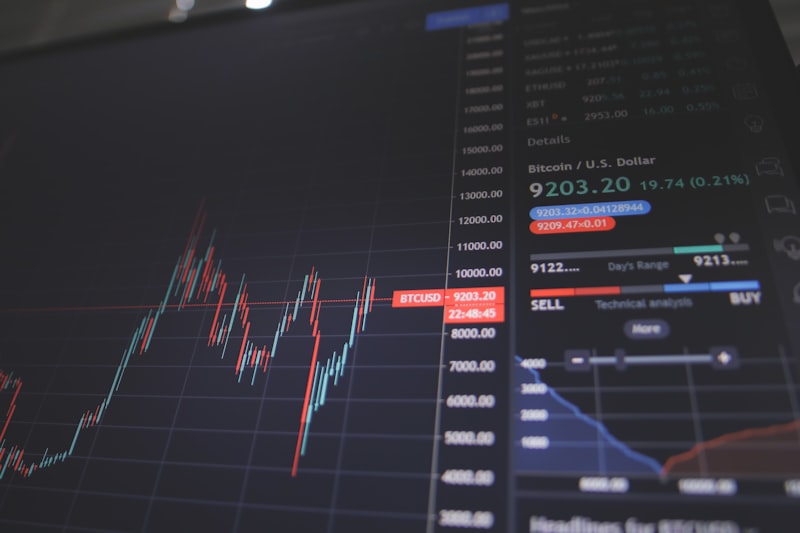
Bitcoin (BTC) is holding in the $71,000–$75,000 range, with CoinDesk noting that the $75,000 level represents a key resistance line that bulls must reclaim to sustain a bullish market structure. Bitcoin posted a 4.19% daily gain recently but faces resistance at the $74,739 area. Ethereum (ETH) prices remain range-bound. The crypto market continues to trade partly as a risk asset—correlated with equity sentiment—and partly as a geopolitical hedge, resulting in choppy, indecisive price action.
Economic Data Calendar
The remainder of this week brings several important data releases that will shape the macro outlook:
- Tuesday, March 24: No major US economic releases expected; focus on Fed commentary and earnings
- Wednesday, March 25: Import Price Index; Jobless Claims (released Thursday); Consumer Sentiment follow-up readings
- Thursday–Friday: Continued earnings flow; watch for any Fed speakers for rate path guidance
Kiplinger’s weekly economic preview emphasizes that the overarching narrative through March 27 will be shaped by how war-related data impacts confidence, spending, and hiring numbers.
Market Outlook
The setup for Tuesday’s open is cautiously bearish. Futures point lower, geopolitical noise is high, and the earnings calendar—led by GameStop’s unpredictable M&A narrative and Concentrix’s post-result selloff—introduces stock-specific volatility. The oil rebound above $100 will buoy energy names (Petrobras, ConocoPhillips, Diamondback) but weigh on transportation, airlines, and consumer discretionary sectors. The Fed’s hold posture and a firmer dollar remain headwinds for both gold and EM assets.
Investors should monitor any new statements from either Washington or Tehran on the diplomatic front; a credible de-escalation signal remains the single most powerful potential upside catalyst for global risk assets in the near term. Until that signal materializes, expect range-bound, headline-driven trading with elevated intraday volatility.
This briefing is published for informational purposes only and does not constitute investment advice. All market data reflects pre-market conditions as of the time of writing and is subject to change.