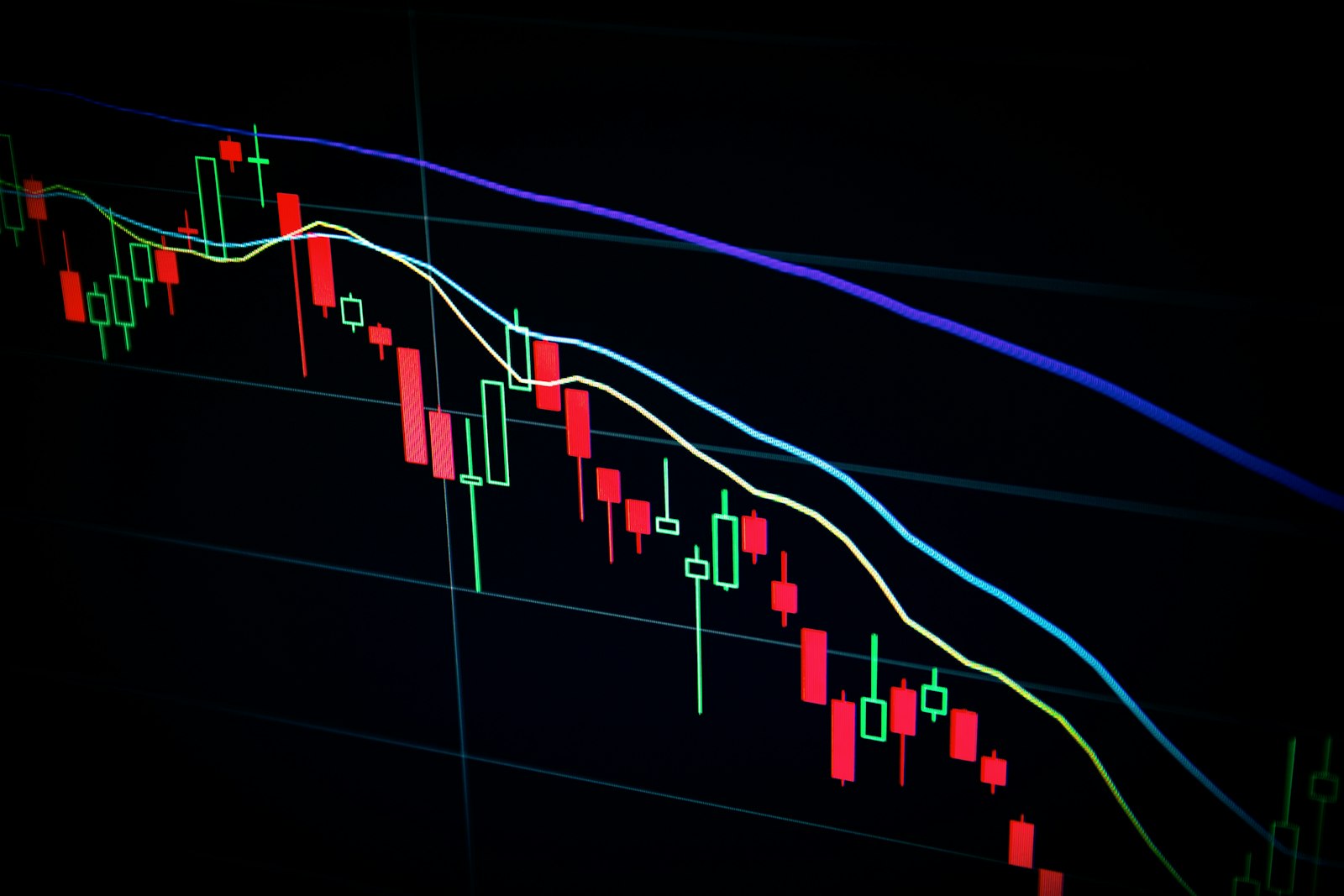

The Magnificent Seven — Apple (AAPL), Microsoft (MSFT), Alphabet (GOOGL), Amazon (AMZN), Meta Platforms (META), Tesla (TSLA), and NVIDIA (NVDA) — collectively represent the most consequential cluster of companies in the history of modern finance. With a combined market capitalization exceeding $17 trillion as of early 2026, they account for approximately 33% of the entire S&P 500’s weighting, a concentration level unprecedented in the index’s history. Their earnings trajectories, capital expenditure plans, and strategic pivots do not merely influence US equities — they define the gravitational field of global capital markets.
For investors focused on Latin American equities, understanding the Magnificent Seven is not an academic exercise. These companies set the tone for global risk appetite, drive Nasdaq valuations that benchmark LatAm tech giants, and their AI infrastructure buildout is reshaping energy demand dynamics that directly impact Vaca Muerta operators like Vista Energy (VIST). This comprehensive analysis covers each company’s competitive positioning, financial performance, and strategic outlook for 2026 and beyond.
NVIDIA: The Indispensable Infrastructure of the AI Economy
Blackwell Architecture and the Data Center Supercycle
NVIDIA (NVDA) has achieved something rare in technology: the creation of a new industrial category for which it is simultaneously the architect, dominant supplier, and de facto standards body. The company’s Blackwell GPU architecture — introduced in 2024 and ramping through 2025-2026 — represents a generational leap in AI compute performance, delivering up to 4x the training throughput and 30x the inference performance of its predecessor Hopper architecture.
NVIDIA’s fiscal year 2025 (ending January 2025) revenue reached $130.5 billion, a staggering 114% increase year-over-year, driven almost entirely by data center GPU demand from hyperscalers (Microsoft, Amazon, Google, Meta) and sovereign AI programs. Data center revenue alone exceeded $115 billion — more than 88% of total revenue — a concentration that reflects the sheer scale of global AI infrastructure investment.
Gross margins have defied historical hardware industry norms: NVIDIA consistently achieved gross margins of 74–76% throughout fiscal 2025, demonstrating extraordinary pricing power that reflects the absence of viable alternatives for frontier AI training at scale. The stock price reflected this dominance, though 2026 has seen increased volatility as questions about the sustainability of hyperscaler capex intensify.
Risks: Competition and Export Controls
NVIDIA’s primary risks in 2026 are twofold. First, custom silicon competition — Amazon’s Trainium chips, Google’s TPUs, and Microsoft’s Maia accelerators — is gradually eroding NVIDIA’s addressable market share within hyperscaler infrastructure, though broad replacement at scale remains years away. Second, US export controls targeting China (the “China chip ban”) have permanently removed a significant revenue source, with China-related revenue declining from approximately 25% of total revenue pre-ban to under 5% today. According to Reuters, the latest rounds of export restrictions announced in late 2025 further tightened these limitations, though NVIDIA has largely redirected this demand to other geographies.
Microsoft: The Enterprise AI Operating System
Azure and the Copilot Ecosystem
Microsoft (MSFT) has executed the most strategically coherent AI pivot of any Magnificent Seven member, leveraging its deep enterprise relationships and $13 billion+ investment in OpenAI into a comprehensive AI product portfolio. Microsoft Copilot — integrated across Microsoft 365, GitHub, Dynamics, and Azure — has become the de facto enterprise AI interface for hundreds of millions of business users globally.
Azure’s growth re-accelerated to 31% year-over-year in the most recent quarter, driven by AI workload migration and hybrid cloud adoption. Microsoft’s total revenue for fiscal year 2025 reached approximately $265 billion, with operating margins expanding to 45% — a testament to the operating leverage embedded in its software subscription model. The Intelligent Cloud segment (Azure + Server products) now contributes over 40% of total revenue and is growing faster than any other segment.
Microsoft’s unique advantage is its ability to monetize AI across the full enterprise stack: from GitHub Copilot (developers) to Copilot for M365 (knowledge workers) to Azure OpenAI Service (enterprise application builders). This breadth creates a switching cost moat that is arguably more durable than NVIDIA’s hardware advantage, as enterprises deeply embed Microsoft tools into core workflows.
Alphabet: Search Resilience and Cloud Momentum
Gemini and the Search Defense
Alphabet (GOOGL) entered 2026 having successfully navigated what many analysts considered an existential threat to its search monopoly: the rise of AI-powered chatbots. Rather than ceding ground, Google integrated AI overviews directly into Search, and early data suggests click-through rates and advertiser ROI have been largely preserved. Google Search revenue grew approximately 12% year-over-year in 2025, demonstrating the resilience of the advertising flywheel even in an AI-disrupted environment.
Google Cloud has emerged as the third-largest cloud platform globally, with revenue exceeding $43 billion in 2025 (+30% YoY) and — crucially — reaching consistent profitability for the first time. Alphabet’s in-house Gemini Ultra model is gaining traction in enterprise AI applications, particularly in healthcare (through Google Health) and genomics (DeepMind’s AlphaFold platform). Total Alphabet revenue for 2025 reached approximately $350 billion, with operating income of $112 billion. Alphabet’s market cap continues to be supported by a $70+ billion annual share buyback program.
Amazon: AWS Dominance and the AI Logistics Revolution
AWS Reacceleration and Free Cash Flow Expansion
Amazon (AMZN) arguably experienced the most dramatic financial transformation of any Magnificent Seven member between 2023 and 2026. After years of heavy investment cycles that compressed margins, Amazon has entered a phase of extraordinary profitability. AWS revenue reached $107 billion in 2025 (+19% YoY), maintaining its position as the world’s largest cloud platform despite aggressive competition from Azure and Google Cloud. More impressively, AWS operating margin expanded to approximately 37%, generating over $39 billion in operating income from cloud alone.
Amazon’s advertising business — now one of the world’s largest — exceeded $60 billion in revenue in 2025, growing at 19% YoY. Total company free cash flow surpassed $100 billion for the first time in 2025, enabling an accelerated share buyback program and record levels of capex investment in AI infrastructure and logistics automation. According to Bloomberg, Amazon’s capital expenditure plan for 2026 exceeds $105 billion, the largest investment plan in the company’s history.
Meta Platforms: The Social AI Paradox
Year of Efficiency and AI Monetization
Meta Platforms (META) has completed one of the most remarkable corporate turnarounds in tech history. After the “metaverse debacle” of 2021-2022 destroyed over $800 billion in market cap, Meta’s “Year of Efficiency” restructuring in 2023 and subsequent AI monetization of its social platforms has restored investor confidence. By 2026, Meta’s quarterly revenue regularly surpasses $55 billion, with operating margins consistently above 40%.
Meta’s competitive moat rests on its unparalleled social graph — 3.3 billion daily active people across Facebook, Instagram, WhatsApp, and Threads — which provides a dataset for AI training and advertising targeting that no competitor can replicate from scratch. Meta AI (powered by the open-source Llama model family) has become one of the most widely used AI assistants globally, with over 500 million monthly active users as of late 2025. The company’s Ray-Ban AI glasses represent its most tangible hardware success, validating a wearables strategy that could eventually compete with Apple in the spatial computing space.
Apple: The Upgrade Supercycle and On-Device AI
Apple Intelligence and the iPhone 17 Cycle
Apple (AAPL) — with a market capitalization hovering near $3.5 trillion — remains the world’s most valuable company despite facing secular headwinds in its core smartphone market. The company’s strategic response to slowing iPhone unit growth has been twofold: deepen the software and services revenue stream (now over $100 billion annualized) and accelerate the shift to AI-enhanced hardware through its proprietary Apple Silicon chips.
The iPhone 17 cycle, launched in September 2025, has been supported by the broader rollout of Apple Intelligence — Apple’s on-device AI system that leverages the Neural Engine in A18 Pro chips to deliver AI features without sending data to external servers. This privacy-first AI approach resonates strongly with Apple’s premium customer base and enterprise buyers, where data sovereignty concerns limit adoption of cloud-based AI alternatives. Services revenue — App Store, Apple Music, iCloud+, Apple Pay, Apple TV+ — continues to expand at 12-15% annually, providing a high-margin, recurring revenue stream that reduces dependence on device upgrade cycles.
Tesla: The Autonomous Pivot
From EV Maker to AI and Robotics Platform
Tesla (TSLA) remains the most divisive of the Magnificent Seven — simultaneously the subject of the most bullish long-term theses and the most persistent fundamental concerns. On the positive side, Tesla’s Full Self-Driving (FSD) software has demonstrated measurable progress toward genuine autonomy, and the planned Cybercab robotaxi service represents a potential trillion-dollar revenue opportunity if execution follows vision. Tesla Energy (Megapack and Powerwall) achieved record deployments in 2025, with energy storage revenue growing over 60% YoY to approximately $10 billion.
On the challenge side, Tesla’s automotive gross margins (excluding regulatory credits) have compressed significantly under competitive pressure from Chinese EVs (BYD in particular) and legacy OEM EV programs. Automotive margins stabilized near 15-17% in late 2025, down from the peak of 28%+ in 2022. The market’s valuation of Tesla increasingly depends on successful execution of the autonomy thesis, making it the highest-risk, highest-reward member of the Magnificent Seven. According to Yahoo Finance, analyst price targets for TSLA range from under $100 to over $500, reflecting the extraordinary uncertainty around the timing and economics of the autonomy business.
The Magnificent Seven’s Impact on Latin American Markets
Risk Appetite and Capital Flows
For LatAm investors, the Magnificent Seven serve as a global risk barometer. When these seven stocks are collectively trending higher, it signals broad investor confidence, abundant liquidity, and generally positive conditions for high-beta emerging market equities. The correlation between the “Mag7 index” and the MSCI Latin America Index has strengthened significantly over the past three years as LatAm’s own tech sector (MELI, NU) has grown in market cap importance.
A detailed analysis of how S&P 500 performance — driven largely by these seven companies — creates transmission effects for LatAm markets can be found in our in-depth piece: S&P 500 Resilience: Analyzing the Impact of US Macro Data on Latin American Markets.
Energy Demand and Vaca Muerta
Perhaps the most underappreciated link between the Magnificent Seven and Latin American equities runs through energy demand. The AI infrastructure buildout driven by these seven companies — data centers consuming enormous quantities of electricity — has become a significant driver of natural gas demand growth, particularly in markets where gas-fired power generation is the most cost-effective method of providing reliable baseload power for data centers.
This dynamic is directly relevant to Vista Energy (VIST) and Argentina’s Vaca Muerta shale play. As US data center operators seek LNG imports to fuel power generation, and as global gas markets tighten under AI-driven demand, Vaca Muerta’s potential as a major LNG export hub gains strategic importance. The Magnificent Seven’s capex is, in a very real sense, a tailwind for Argentine energy exporters. Read our full analysis: Vista Energy: The Vaca Muerta Breakout and Why VIST is the Strategic Energy Play of 2026.
LatAm Digital Champion Valuation Uplift
When Nasdaq growth multiples expand — driven by strong Mag7 earnings — the valuation uplift extends to LatAm tech leaders. MercadoLibre (MELI) and Nu Holdings (NU) are both Nasdaq-listed and are frequently benchmarked against US tech peers. MELI, for instance, trades at a premium P/E multiple that reflects both its own growth trajectory and the “LatAm Nasdaq premium” that institutional investors apply when US tech sentiment is strong. This creates a scenario where even purely domestic LatAm business developments get amplified by US tech sentiment — for better and for worse.
Risk Factors for the Magnificent Seven in 2026
- AI Investment Returns: The central risk for 2026 is whether hyperscaler AI capex (estimated at $300+ billion across the Mag7 for 2026) generates sufficient revenue and earnings returns to justify the capital allocation. Any signs of “AI capex bubble” dynamics would trigger severe multiple compression across the group.
- Antitrust and Regulatory Risk: Multiple Magnificent Seven members face active antitrust litigation in the US and EU. Google faces potential forced divestiture of Chrome; Amazon faces marketplace antitrust scrutiny; Meta faces repeated privacy and competitive challenges. A landmark adverse ruling could materially impair any of these businesses.
- Geopolitical Trade Tensions: US-China trade tensions have already materially impacted NVIDIA and Apple (iPhone sales in China). Further escalation — including potential retaliatory technology restrictions — represents a tail risk for the entire group.
- Interest Rate Re-acceleration: If US inflation re-accelerates and the Fed reverses course, higher long-duration discount rates would compress the extended multiples of these growth companies, triggering a significant de-rating.
- Disruption Risk: Open-source AI models (Meta’s Llama, Mistral, DeepSeek) threaten the commercial moats of proprietary AI platforms, potentially compressing margins for cloud AI service providers.
Strategic Outlook: The Magnificent Seven in 2026 and Beyond
The Magnificent Seven collectively represent the most concentrated bet on the future of the digital economy that global equity markets have ever made. Their dominance is self-reinforcing: their enormous free cash flows fund AI research that extends their competitive advantages, which generate more cash flow, which funds more research. This virtuous cycle has made them extraordinarily resilient to competitive threats in the near term.
However, the law of large numbers is beginning to assert itself. At a combined $17 trillion in market cap, delivering the earnings growth required to justify current valuations demands not just excellent execution but near-perfect execution — sustained by a global macro environment that remains broadly accommodative. For LatAm investors, the practical implication is clear: monitor the Magnificent Seven as a leading indicator for global risk appetite, and use periods of Mag7 consolidation as opportunities to build positions in high-quality LatAm names where domestic catalysts provide additional alpha drivers beyond US tech sentiment.
Stay current with broader market trends by reading our S&P 500 and LatAm macro analysis for the latest cross-market insights.
Key Takeaways
- The Magnificent Seven represent approximately 33% of the S&P 500 — their combined performance essentially defines US equity index returns.
- NVIDIA’s Blackwell architecture has cemented its position as the indispensable AI infrastructure provider, with fiscal 2025 revenue of $130.5 billion (+114% YoY).
- Microsoft’s Azure re-acceleration (+31% YoY) driven by AI workloads confirms enterprise AI adoption is moving from experimental to production.
- Meta’s social AI monetization and Alphabet’s search defense demonstrate that AI is enhancing, not disrupting, established digital advertising business models.
- Tesla’s autonomy thesis remains the highest-risk, highest-reward narrative in the Mag7 — execution on robotaxi deployment will be the defining catalyst for 2026.
- The AI data center energy demand created by Mag7 capex plans is a direct structural tailwind for natural gas producers, including Argentina’s Vaca Muerta operators.
- LatAm digital champions (MELI, NU) benefit from Mag7 earnings strength through multiple expansion and improved global risk appetite for high-growth technology companies.